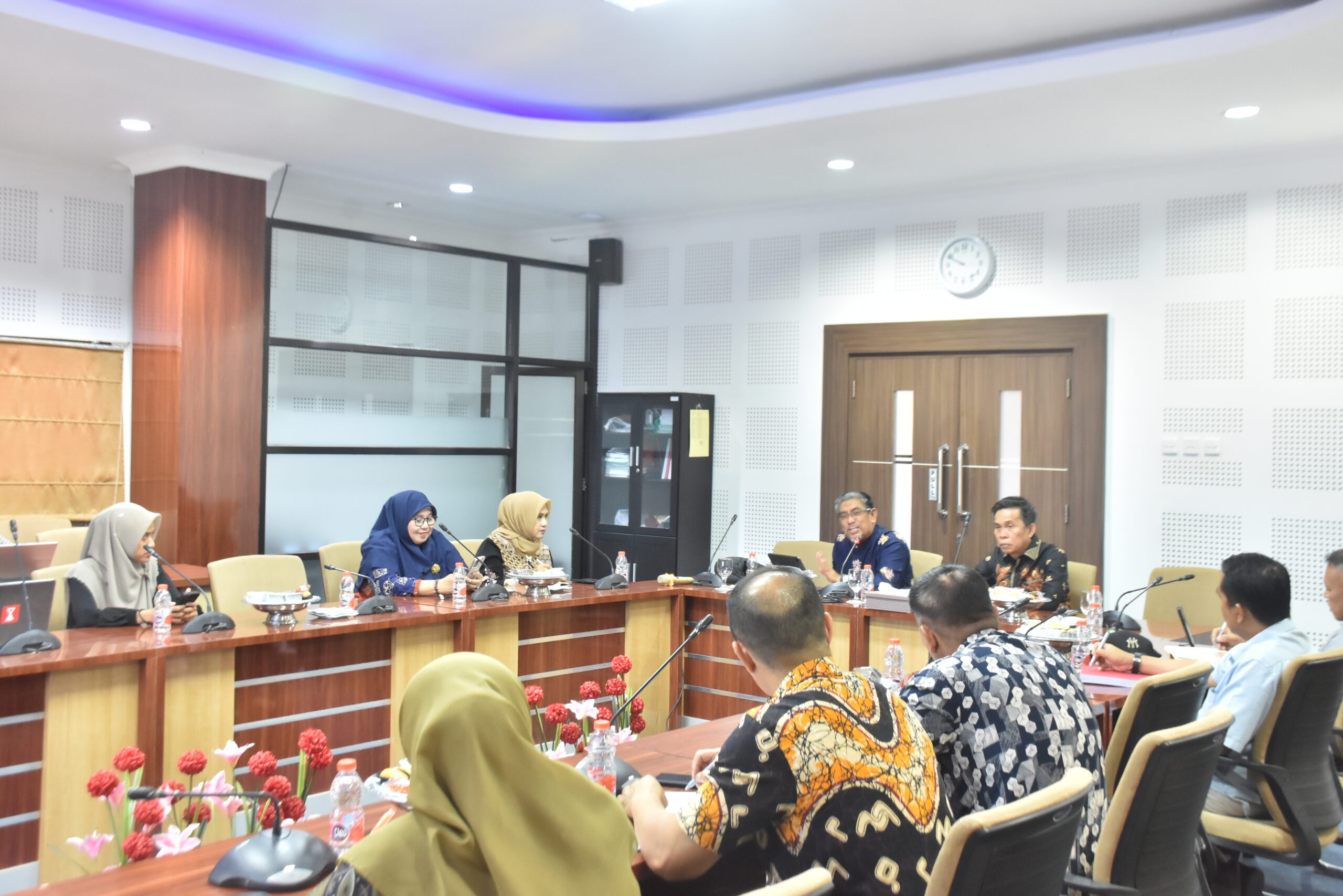

FIB Unhas – The Faculty of Cultural Sciences, Universitas Hasanuddin (FIB Unhas) held a public lecture on the challenges and opportunities for humanities in the AI era on Friday (3/10) at the Prof. Mattulada Hall. This event was the inaugural event for the 65th Anniversary (Dies Natalis) of FIB Unhas.
This academic activity was chosen to open the series of events to demonstrate FIB’s commitment to knowledge. The moral purpose of humanities can be seen in the original goals of the humanities. Prof. Dr. Fransisco Budi Hardiman mentioned there are seven moral purposes of humanities. “Of those seven, I want to draw you to two goals: respecting human dignity and preventing dehumanization,” he said.
The author of the book Aku Klik Maka Aku Ada (I Click, Therefore I Am) observed the current situation between humans and technology. “The current era, where technology and Artificial Intelligence have cornered us into an anxious situation. In this digital era, machines are becoming more like humans, but conversely, humans are becoming more like machines,” he concluded, opening the public lecture.
He began with a philosophical question: what is the body in the AI era? F. Budi Hardiman then invited the academic community filling the room to look at the history of communication in the world. There are three eras of communication: rational discourse, mediacracy, and infocracy.
“The infocracy era, which is the current one, is an era where democracy experiences paralysis. In this era, the individual does not exist, nor does the group. We are in a time where communication occurs but without community,” he explained.
The impact is a new alienation in humans. Humans are considered algorithmic anomalies in the digital era. “This happens as an effect of disembodiment,” he said.
Furthermore, a new nihilism is also formed as a result of a loss of faith in truth itself. “Everyone can express their own truth,” he added.
According to him, a re-embodiment is needed between humans as social selves and the digital world. “AI cannot replace subjective human experience,” he concluded.
Therefore, he believes it is necessary to be wise in using AI. “The use of AI in humanities research requires re-embodiment to avoid alienation, reduction of meaning, and dehumanization,” he summarized.
The Dean of the Faculty of Cultural Sciences, Prof. Dr. Andi Muhammad Akhmar, S.S., M. Hum., expressed his admiration for F. Budi Hardiman. “When I was an undergraduate, I read the book Kritik Ideologi (Critique of Ideology) written by him. At that time, F. Budi Hardiman’s name was famous among activists,” he recalled.
Andi Akhmar also revealed that several of his studies cite the figure, who also teaches at Universitas Pelita Harapan. “We want FIB to encourage digital humanities studies so they can have a broader impact on society,” he concluded.