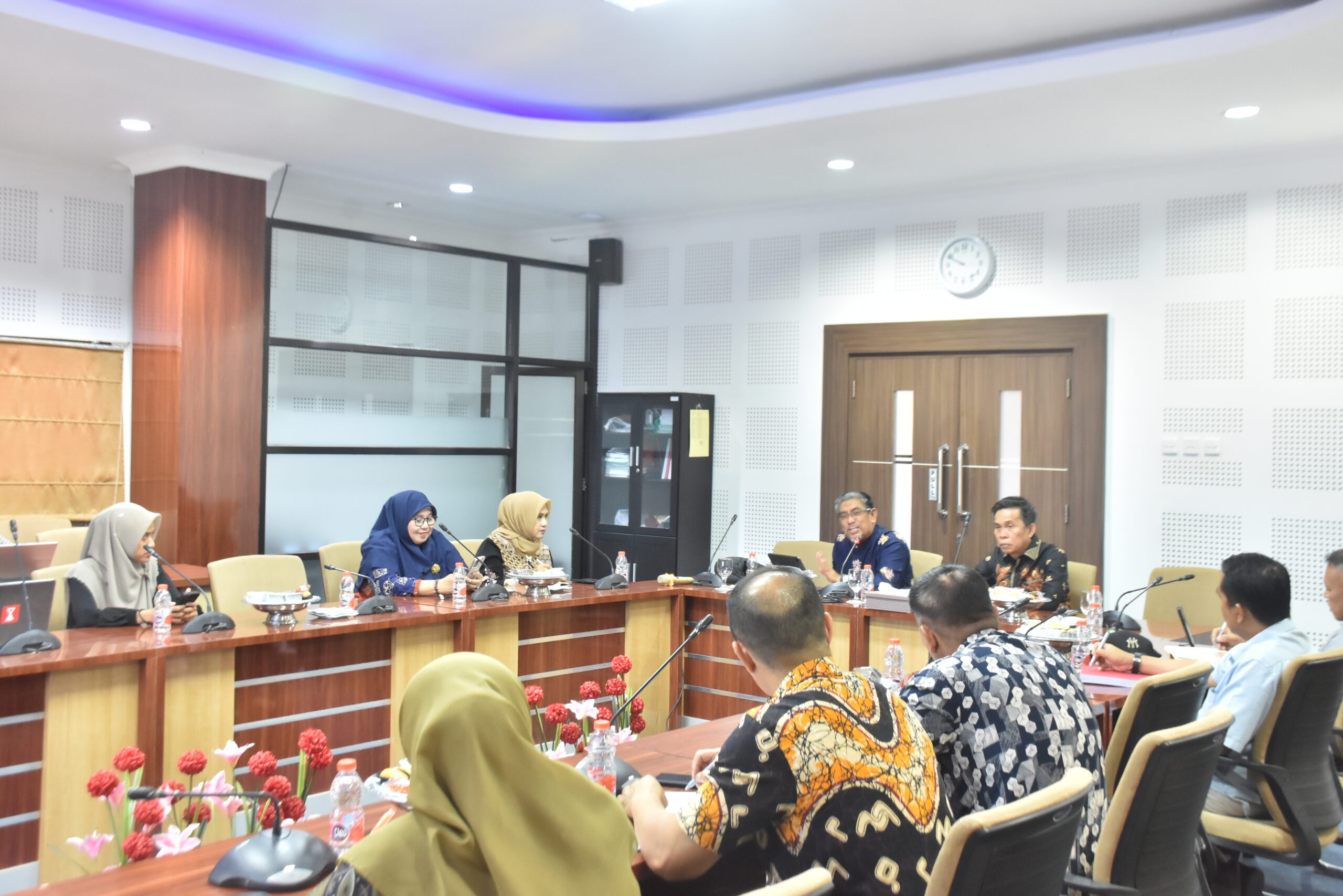
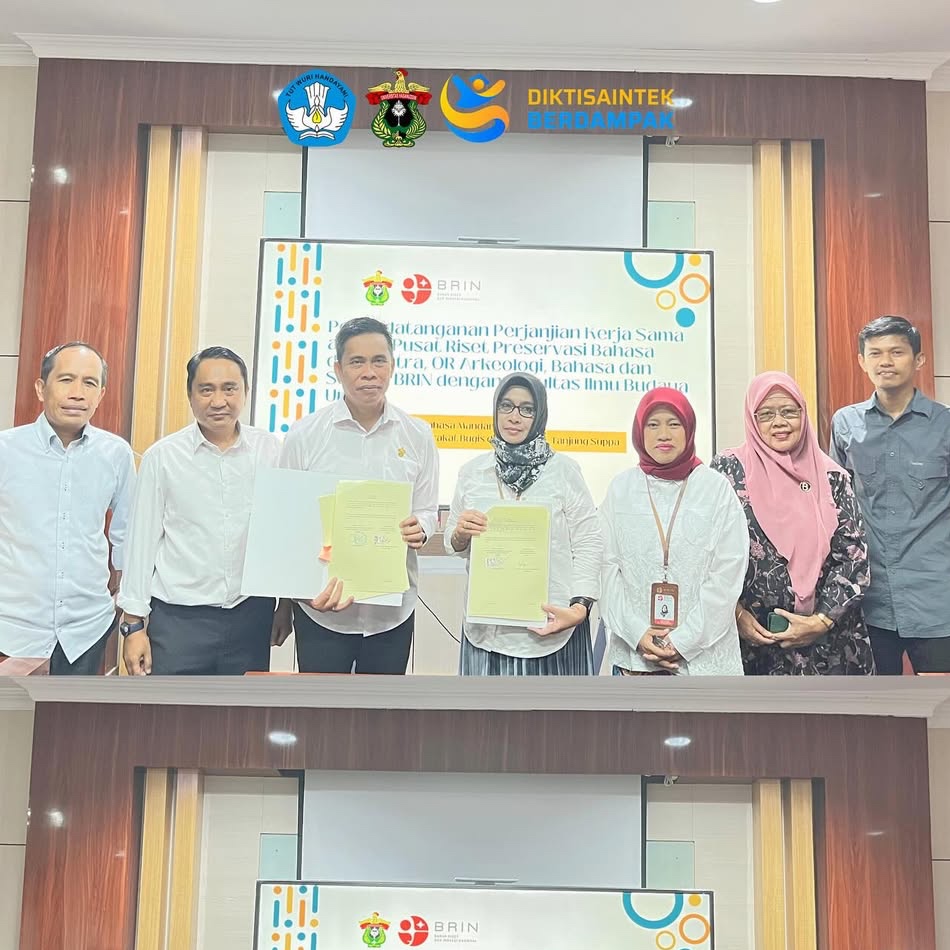
FIB Unhas – A Cooperation Agreement has been signed between the Center for Language and Literature Preservation Research (Archaeology, Language, and Literature Research Organization, BRIN) and the Faculty of Cultural Sciences, Unhas. This collaboration affirms a research direction based on the urgency of language preservation, with an initial focus on the “Research on the Vitality of the Mandar Language within the Bugis Community Enclave in Unung Lero, Tanjung Suppa.”
The Dean of FIB, Prof. Dr. Andi Muhammad Akhmar, S.S., M.Hum., emphasized three points. First, publication quality must be the standard: research articles are targeted for publication in reputable journals. Second, every output should, as much as possible, provide an impact on society and industry—in line with the ministry’s current slogan. Third, FIB is finalizing its 2026–2030 research roadmap; this document is expected to be a reference for BRIN to open the next umbrella of research cooperation.
At the implementation level, the Dean was accompanied by the Vice Dean III for Partnership, Research, Innovation, and Alumni, Dr. Wahyuddin, S.S., M.Hum., and Prof. Dr. Muhlis Hardawi, S.S., M.Hum. From BRIN, Nuraidar Agus (Center for Language and Literature Preservation) was present, confirming several research agendas are underway and targeting publication starting January 2026. She highlighted the importance of mapping as an initial step, while opening opportunities for FIB to be involved in relevant focus clusters.
BRIN also encouraged the continuity of collaboration—including a “degree by research” scheme—to strengthen the language research ecosystem in the eastern Indonesia region.
The BRIN delegation was accompanied by several researchers; from FIB, one lecturer from Arabic Literature was assigned to join the joint research team. With this inter-institutional mandate, the study on Mandar Language vitality will examine aspects of intergenerational transmission, domains of use, and language attitudes within the Bugis enclave context in Unung Lero. The results are expected to form the basis for evidence-based policy and strengthen living cultural narratives—bringing research from campus to community, from manuscript to preservation practice.