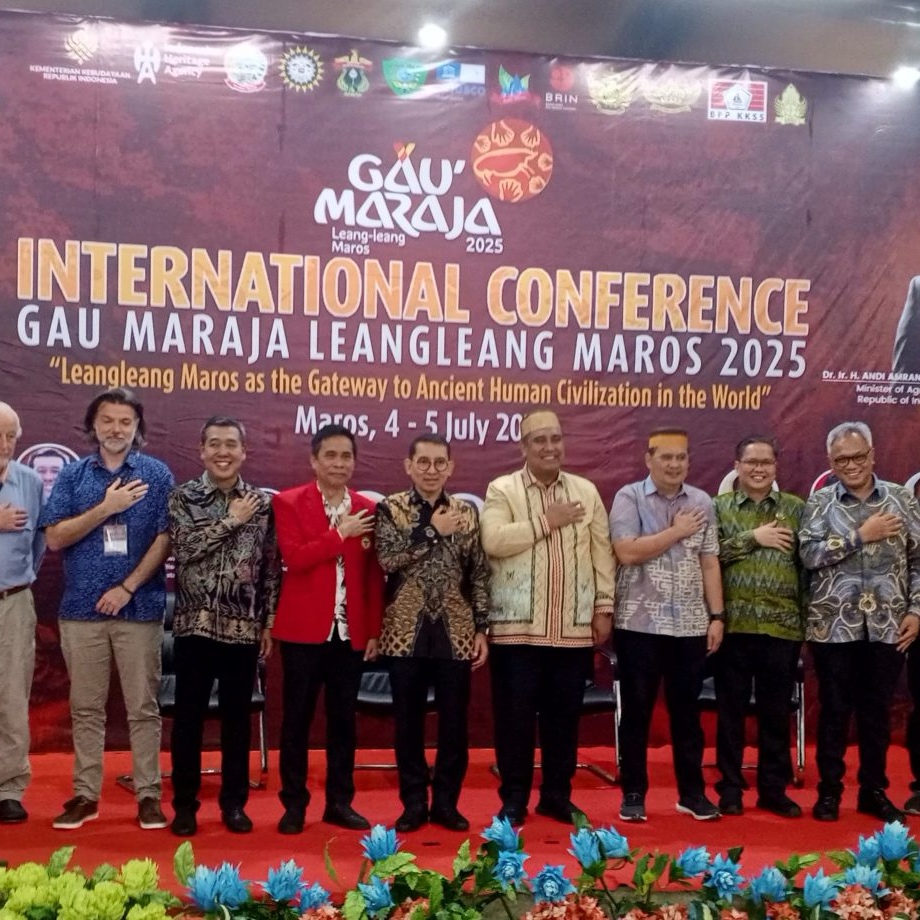
FIB Unhas — The series of Gau Maraja Leang-Leang activities in Maros reached one of its peaks on Thursday (4/7/2025) with the holding of the International Cultural Conference at the Maros Regency Multipurpose Hall. This event brought together academics, researchers, bureaucrats, and cultural activists from home and abroad to discuss one thing: cultural and environmental heritage as a center for human reflection.
Starting at 08.00 Wita, the event was formally opened by two masters of ceremonies: Rezky Ramadhani and Andi Inayah Soraya—both young academics from the Faculty of Cultural Sciences, Universitas Hasanuddin (FIB Unhas). The opening prayer was delivered by Alimuddin, S.Pd., followed by the singing of the national anthem “Indonesia Raya” led by Sitti Sahraeny, S.S., M.AppLing., Secretary of the English Literature Department, FIB Unhas, which helped create a solemn atmosphere amidst the warm Maros morning.
This conference was an extension of the spirit of previous years, where FIB Unhas and the Maros Regency Government have consistently treated culture as an infrastructure for thinking. In his remarks, Prof. Dr. Andi Muhammad Akhmar, S.S., M.Hum., Dean of FIB Unhas, emphasized that this event “is not just a scientific activity, but also an important academic and cultural responsibility.”
“This conference is a tangible form of our commitment to nurturing and expanding the understanding of our cultural and natural heritage,” he said, mentioning the close cooperation between Unhas and the Maros Regency Government in organizing the event.
This year, Leang-Leang and the Maros karst region were placed at the center of attention: as an archaeological site and a gateway to the ancient human civilization of the world. This narrative was reinforced by the presence of experts in archaeology, anthropology, history, and linguistics at the forum.
In his welcome speech, the Chair of Perwira LPMT, Sapri Pamulu, Ph.D., linked the momentum of this conference to the local spirit of “Gau Maraja,” a cultural initiative that he said “revives the collective memory of the Maros people regarding their own identity and history.”
Sapri also stressed the importance of avoiding an elitist approach to cultural preservation. “Culture does not only belong to academics or institutions, but also to the community. Gau Maraja is the bridge between science and the people,” he asserted.
The most anticipated speech came from Dr. H. Fadli Zon, S.S., M.Sc., the Minister of Culture of the Republic of Indonesia. In his speech, which was both historical and political in tone, he referred to Leang-Leang as a “living inscription that marks the greatness of the Archipelago’s civilization before the nation-state was formed.”
“When the world talks about ancient human sites, we must not only offer Borobudur or Sangiran. Maros has Leang-Leang, and Leang-Leang is a strong argument that human history was not only written from the centers,” he stated. He also reminded that the preservation of cultural sites must go beyond ceremonies or momentary activities; preservation requires integration into the curriculum, development policies, and the active participation of the younger generation.
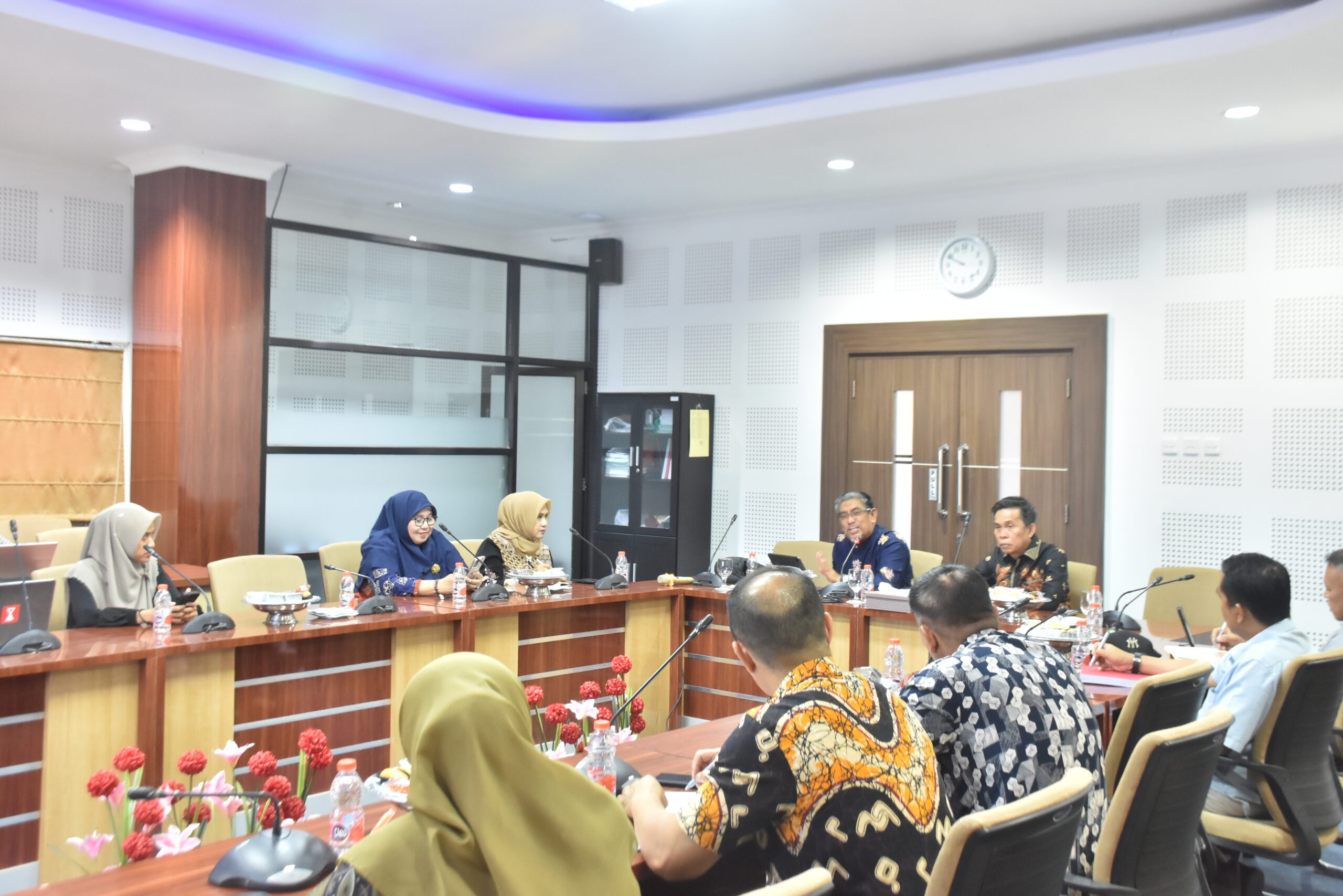
After the opening session, the conference continued until the afternoon. Various papers were presented in parallel panels, discussing themes surrounding archaeological heritage, local cultural dynamics, karst environmental conservation, and the potential of the Leang-Leang area as a living museum.
The conference also became a medium for affirming the role of locality in global discourse. Several speakers from indigenous communities and cultural activists in Maros also gave presentations, asserting that knowledge about sites like Leang-Leang cannot be separated from the narratives of the surrounding communities.
Several sessions in the conference also provided space for cultural activists and local communities who have been striving to protect the Leang-Leang site from the threat of ecological damage. These discussions showed that the preservation of cultural heritage cannot be separated from the participation of the communities living alongside the site—those who inherit the stories, memories, and historical bonds not recorded in textbooks.
Towards 17.00, the conference closed with a collective reflection on the urgency of protecting cultural heritage amidst development expansion. Many participants voiced concerns over plans for limestone mining in the Maros-Pangkep karst region, which are feared to threaten the ecosystem and prehistoric sites recognized by UNESCO.
However, for the committee, the presence of cross-element participants in this conference signaled that a counter-current is strengthening. The discourse on preservation is no longer exclusive. It has become a meeting ground for academics, artists, bureaucrats, and the public. And Maros, with its Leang-Leang, has once again proven to be more than just a landscape of rocks; it is also a landscape of civilization.(*)