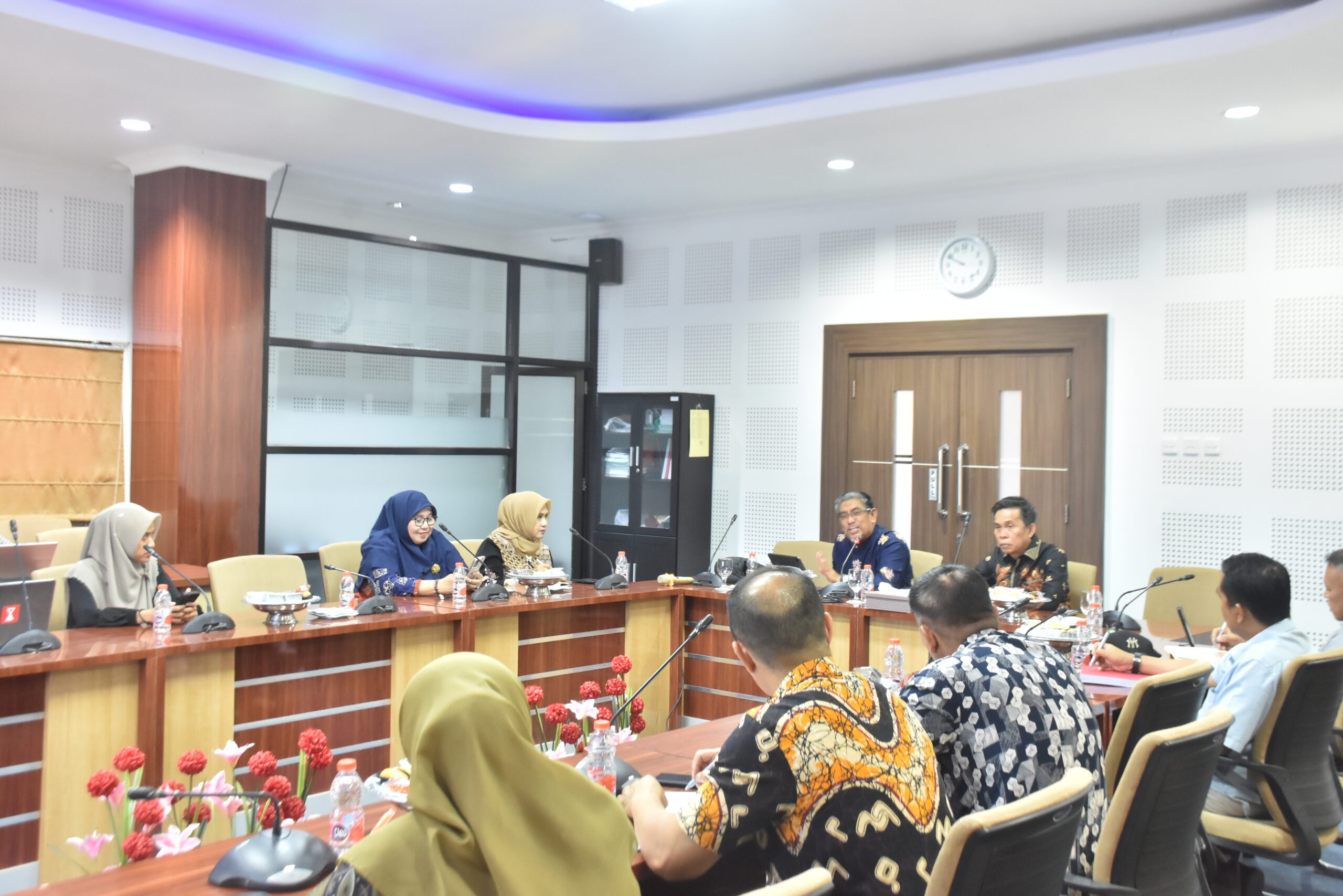
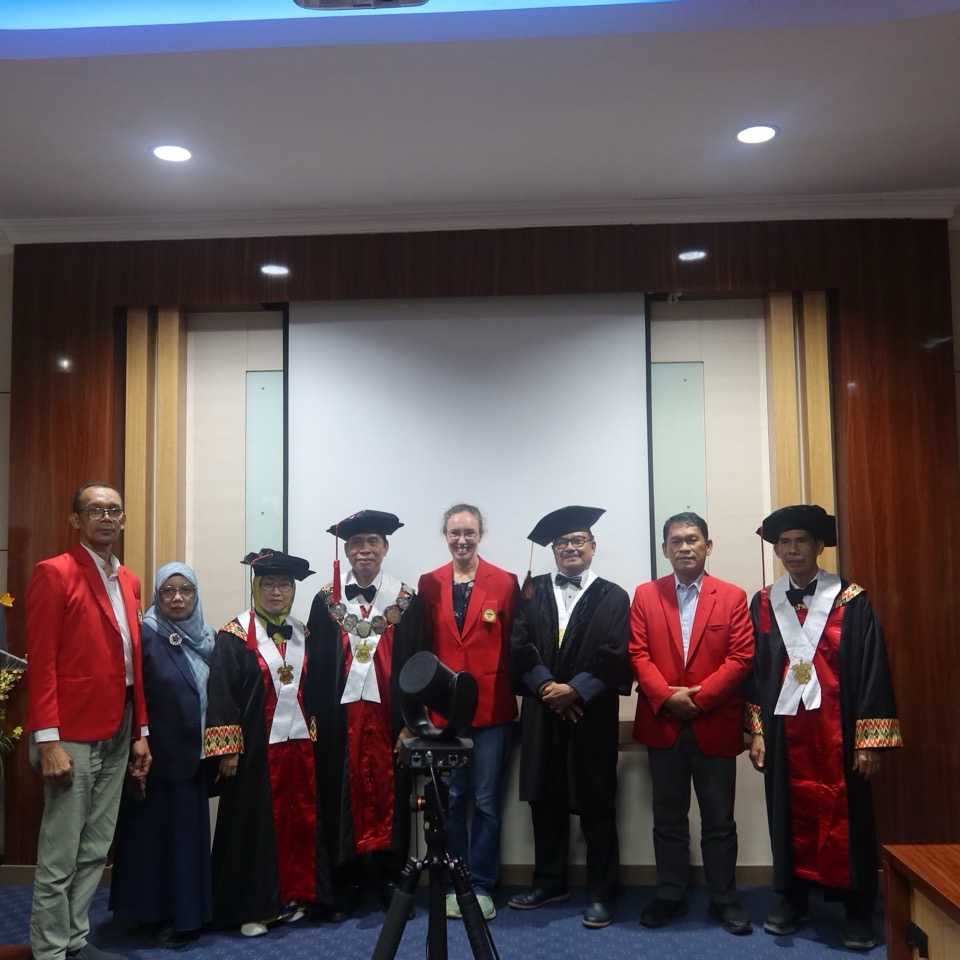
FIB Unhas – A strong academic atmosphere was felt in the Senate Room of the Faculty of Cultural Sciences (FIB) Unhas on Wednesday, June 25, 2025. This time, the intellectual stage belonged to Emily Rose Logan, an international doctoral student, who confidently defended her dissertation before the promoter and examiner team.
In the defense session, chaired by Prof. Dr. Andi Muhammad Akhmar, S.S., M.Hum., Emily presented her research results titled “Luwu Language and Identity: Perspectives of Vitality, Dialect Intelligibility and Morphology.” This dissertation thoroughly examines the relationship between the language and identity of the Luwu people in South Sulawesi from various perspectives—vitality, dialect intelligibility, and its unique morphology.
Under the guidance of Prof. Dr. Hamzah A. Machmoed, M.A., Prof. Dr. Akin Duli, M.A., and Dr. Ikhwan M. Said, M.Hum., Emily’s research provides a comprehensive picture of the current condition of the Luwu language. One of her interesting findings is the high level of mutual intelligibility between the highland and coastal dialects. This, she argued, strengthens a singular sense of ethnolinguistic identity among speakers. Furthermore, she also highlighted unique morphological traces, such as the increasingly rare infix -um-.
More than just a linguistic analysis, the dissertation also touched on the researcher’s personal aspects. Emily recounted how the process of learning the Luwu language firsthand gave her an advantage in data collection and processing.
“Learning the Luwu language was not just an academic project, but a journey to understand how a community nurtures its soul,” Emily said, describing her experience. “This research shows how strong the bond is between language and identity. I truly hope that the development of Luwu-language media can become a bridge for the younger generation to stay connected to their cultural roots.”
For her in-depth research, Emily Rose Logan successfully defended her dissertation. Her research not only makes a significant contribution to the world of linguistics but also provides concrete recommendations for the promotion and preservation efforts of the Luwu language in the future.