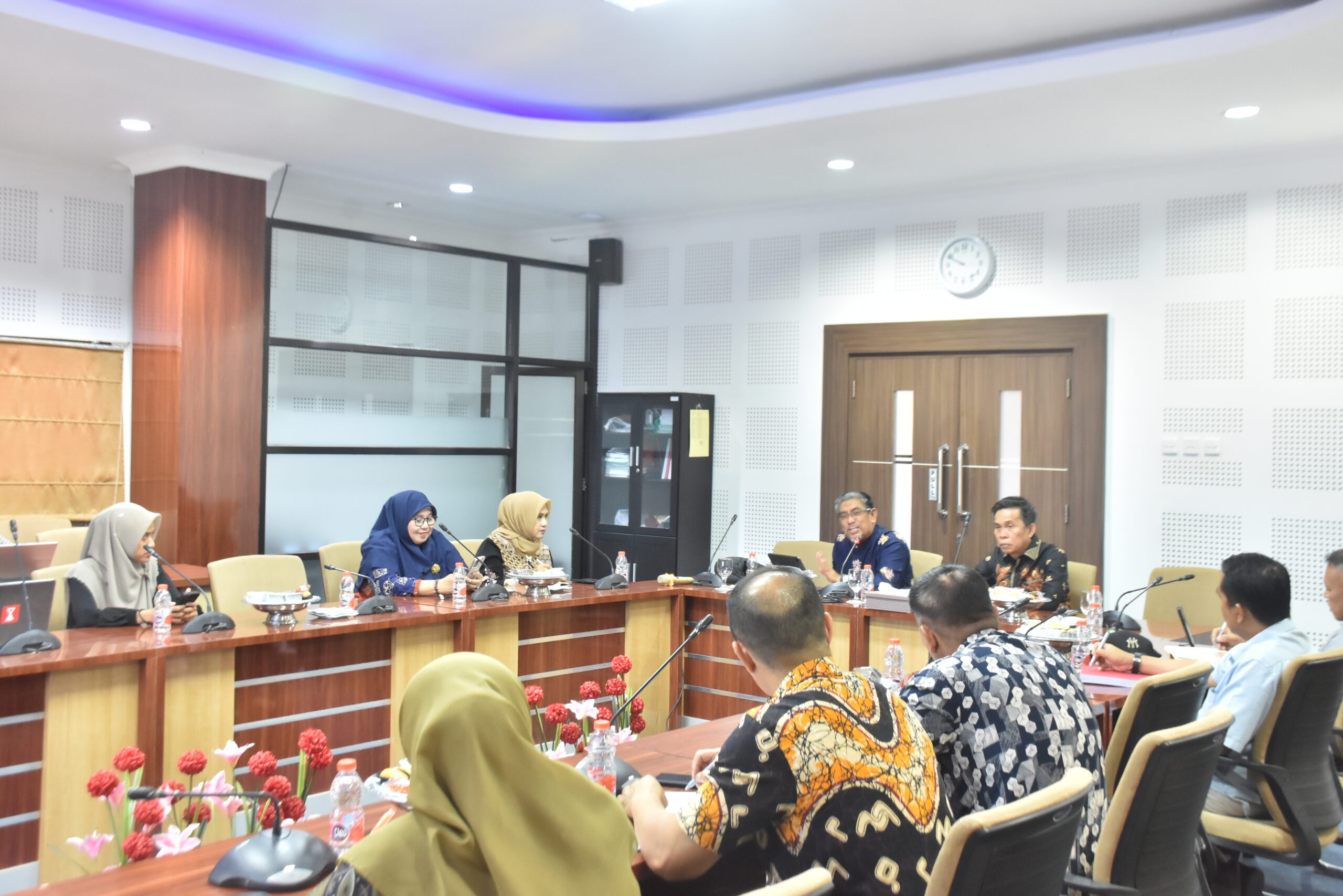
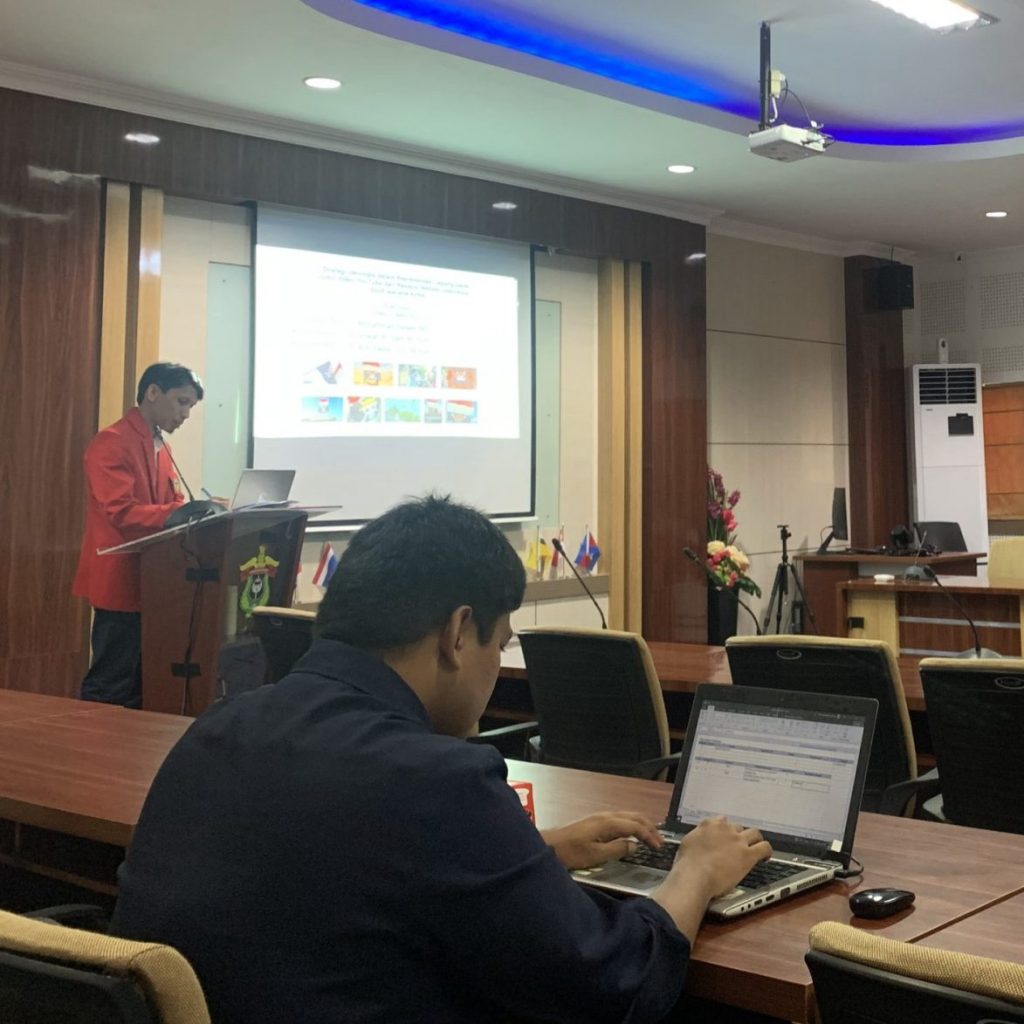
Faculty of Cultural Sciences – A word is not just a string of letters with a fixed meaning. A word can be interpreted into many meanings and can be constructed as an ideological instrument. This was stated by Rudy Yusuf during his dissertation defense, which took place in the Senate Room of the Faculty of Cultural Sciences (FIB) on Wednesday (6/8).
The Doctoral (S3) student in Linguistics wrote a study titled “Ideological Strategies in the Representation of Japan on YouTube Video Titles and Indonesian Netizens’ Reception: A Critical Discourse Study.”
Rudy used several approaches to answer the research questions in his study, including applied linguistics, critical discourse analysis, ideological interpellation, and encoding-decoding. His objects of study were titles and comments on the YouTube channels Genki Banget and Neo Japan.
“We can find that video titles work strategically to ‘call’ (interpellate) netizens into a specific ideological position,” he explained.
The lecturer from the Japanese Literature Department mentioned that this “call” occurs through word choice, sentence structure, and affection. Japan is constructed as a familiar entity. They are also seen as a superior and aspirational nation. This reinforces a positive image that supports symbolic domination and postcolonial power relations.
The ideological representation of Japan is also visible in netizens’ comments. The majority of the audience places themselves in a hegemonized position by the narrative message conveyed by the content from both channels.
“This indicates that the ideological representation of Japan in the video content is not only accepted but also internalized and adapted by Indonesian netizens,” he concluded.
According to him, affection becomes the primary medium for masking ideology, while YouTube’s algorithm acts as an apparatus for ideological distribution and monetization.